

The ancient world was home to some of the most brutal tyrants, sadists, and murderers, despite the fact that we frequently romanticise it through imposing monuments and fabled conflicts. Unchecked cruelty plagued the ancient past, from insane tyrants who created horrifying execution devices to bloodthirsty Roman emperors who set fire to their own cities. In this blog post, we expose the 9 most heinous criminals in the ancient history, whose horrifying acts of brutality and complete depravity left a lasting stain on history. Continue reading to learn the real tales of the first villains in history and the terror reigns that rocked empires.
Here are the 9 most heinous criminals in ancient history:
Angulimala (Ancient India – 6th Century BC)
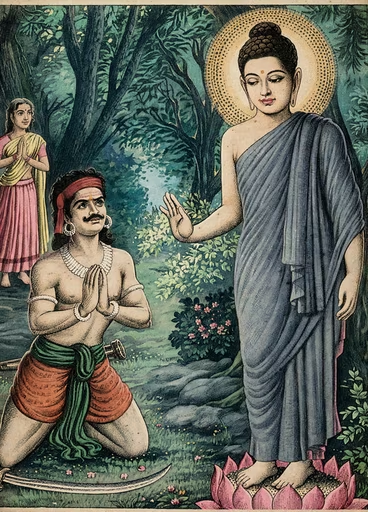
The scholar Ahimsaka was forced to gather a thousand human fingers as a result of a cruel test administered by a jealous teacher. He transformed entire communities into wastelands as the vicious bandit Angulimala. He killed travellers without showing any mercy, stringing their severed right-hand fingers into a horrific necklace.His mother was the last person he meant to harm after gathering 999 fingers. In order to prevent this ultimate matricide, the Buddha stepped in and subdued the murderer. Angulimala permanently left behind his violent past by giving up violence, seeking atonement, and becoming an enlightened monk.
Liu Pengli (Ancient China – 2nd Century BC)
Historical criminologists consider Liu Pengli, a royal prince of the Han Dynasty in the second century BC, to be among the first known serial killers in history. Before being deprived of his titles and exiled, he terrorised his own realm for almost thirty years while protected by his royal immunity.
He slaughtered over 100 confirmed victims simply for his own amusement and hedonistic pleasure. He led aggressive nighttime marauding expeditions to ambush travellers and raid local village homes. He systematically looted and stole the personal belongings and property of the people he murdered. He recruited, armed, and operated a personal gang composed of 20 to 30 slaves and fugitive outlaws who were actively hiding from the law. His relentless nighttime raids effectively paralyzed his entire kingdom with fear, forcing citizens into a self-imposed curfew where they refused to leave their homes after dark.
Liu Pengli’s sovereignty was abolished and his land was reclaimed by Emperor Jing in 116 BC.
Locusta of Gaul (Ancient Rome – 1st Century AD)
Locusta of Gaul was a prominent botanist and professional poisoner who worked for the Julio-Claudian dynasty in ancient Rome in the first century. Historians frequently consider her to be among the first known serial killers in history.
She gained notoriety by creating deadly poisons for powerful imperial figures, including Emperor Nero and Empress Agrippina. She formulated a lethal concoction (believed to be from toxic mushrooms or belladonna) used by Empress Agrippina to poison Emperor Claudius, clearing the path for Nero to take the throne. In 55 AD, under direct orders from a furious Emperor Nero, she engineered a fast-acting poison that killed Nero’s 13-year-old stepbrother and chief rival, Britannicus, via a goblet of chilled water at a dinner party. During her 13-year tenure as Rome’s state-sanctioned “Imperial Poisoner,” she was granted immunity and large country estates by Nero. She used these properties to run an official academy of assassination. To perfect the speed and efficacy of her various toxic formulas, she and her students systematically tested deadly potions on hundreds of helpless slaves, innocent children, and animals. Following Nero’s suicide in 68 AD, her immunity expired. Nero’s successor, Emperor Galba, arrested her and had her dragged through the streets of Rome in chains before her execution in 69 AD.

Liu Ziye (Ancient China – 5th Century AD)
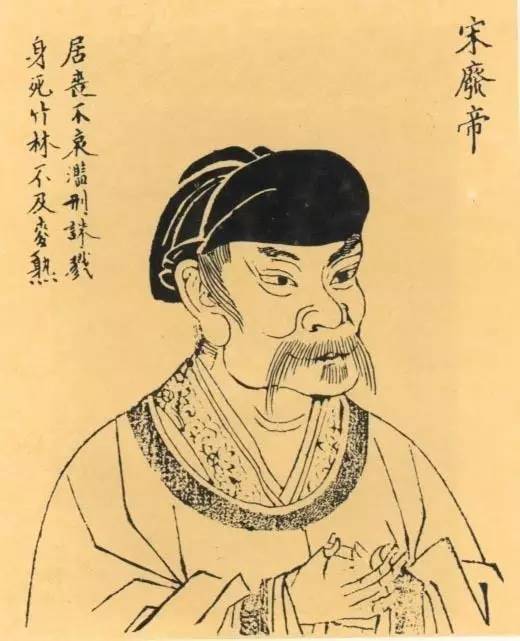
Liu Ziye, a violently sadistic teenage emperor of the Liu Song Dynasty, is infamous for his brutal and disorderly rule. He killed authorities, family members, and political enemies as a result of his unbridled megalomania.
He forced his brother to commit suicide and executed numerous other male relatives, including his uncle and all four of his sons. He trapped his uncles in cages and treated them like cattle, stripped and naked. He also dubbed him uncle Liu Yu the “Prince of Pigs” and forced him to eat from a wooden trough.
He forced his paternal aunt, Princess Xincheng, into his harem. When her husband objected, Liu Ziye had him executed. He ordered the women of imperial palace to strip naked and chase each other in the royal garden. Whoever refused were immediately executed.
He had a deep resentment towards his father. He defaced his father’s portrait and covered his tomb with dung. He executed several pregnant consorts and court maids, frequently dismembering their bodies or cutting out their organs.
Tarquin the Proud (Ancient Rome – 6th Century BC)
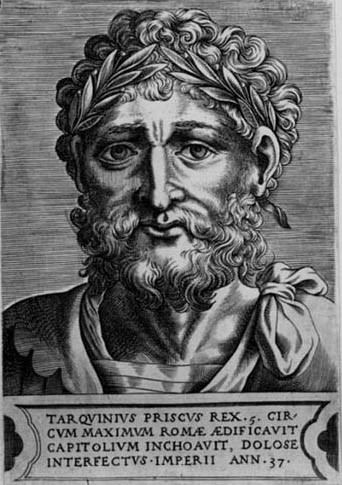
Lucius Tarquinius Superbus (commonly known as Tarquin the Proud) was the seventh and penultimate king of ancient Rome, ruled from 534 BC to 509 BC. His tyrannical, murderous rule and full contempt for Roman customs earned him infamous historical position as a tyrant and immediately spurred the overthrow of the Roman monarchy, beginning the establishment of the Roman Republic.
To clear his path to the throne, Tarquin conspired with his mistress (and later wife), Tullia Minor. Together, they orchestrated the murders of Tarquin’s first wife, Tarquin’s elder brother, and Tullia’s own father, the sitting Roman King Servius Tullius.
Following the violent assassination of his father-in-law, King Servius Tullius, Tarquin committed the supreme sacrilege of refusing to allow the body a proper burial, leaving the dead king to be desecrated in the streets. Upon seizing the throne, he launched a brutal purge, executing dozens of leading Roman senators whom he suspected of remaining loyal to his predecessor.
Breaking centuries of hallowed Roman custom, Tarquin fully bypassed the legal system to decide capital crimes entirely by himself, utilising this absolute power to execute, expel, or take the property of anybody who resisted him. He subjected thousands of free Roman citizens to effective slavery, imposing enormous taxes and forcing the populace into hard, dangerous state labor to construct his massive monuments, including the Cloaca Maxima and the Temple of Jupiter Optimus Maximus. In 509 BC, Tarquin’s despotic reign culminated when his son, Sextus Tarquinius, violently raped the virtuous Roman noblewoman Lucretia.
Phalaris (Ancient Greece – 6th Century BC)
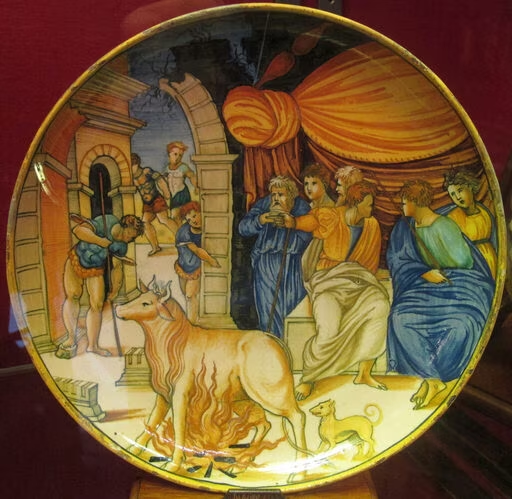
Phalaris was a famously brutal tyrant who governed the Greek city of Acragas (modern Agrigento) in Sicily from around 570 BC to 554 BC. His legacy is inextricably linked to his severe sadism and the fabrication of horrifying execution spectacles. He was revered in antiquity as the perfect embodiment of tyrant madness.
He armed his construction labourers and ask them to slaughter the celebrating citizens of the sacred Thesmophoria festival to seize absolute power. Phalaris notoriously commissioned an Athenian artisan named Perillos to craft the Brazen Bull, a hollow, life-sized bronze statue designed as an execution chamber. Victims were locked inside while a massive fire was stoked underneath, slowly roasting them alive.
The bull was designed with a complex, brutal system of internal acoustic pipes and reeds in its snout. This gadget purposefully turned the dying victims’ agonised, muffled screams into melodic, resonant bellows that resembled an enraged animal for the public’s theatrical enjoyment. He made the inventor the very first test subject of his own deadly device.
According to ancient historical traditions, Phalaris’s psychopathic tendencies went far beyond execution; early accounts allege that he engaged in cannibalism, routinely murdering and eating suckling human infants. Phalaris held Acragas under a stranglehold of paranoia, executing political dissidents and citizens alike inside the bull. His reign of terror finally ended around 554 BC when a popular uprising overthrew him, resulting in the public roasting of Phalaris inside his own beloved bronze bull.
Alexander of Pherae (Ancient Greece – 4th Century BC)
From 369 BC until his murder in 358 BC, Alexander of Pherae, a famously cruel tyrant, governed the Greek city of Pherae in Thessaly. His tyrannical rule was characterised by widespread regional conflict, widespread killing, and intense paranoia.
In 369 BC, Alexander initiated his rise to absolute power by poisoning his own brother, Polyphron, who had been ruling Pherae for just a single year. He infamously butchered the entire citizen populations of two friendly Thessalian cities, Meliboea and Scotussa. He surrounded their public assemblies with his mercenary troops and ordered a surprise mass slaughter of the unarmed populations.
When the renowned Theban general Pelopidas arrived in Thessaly as a peaceful ambassador to negotiate a treaty, Alexander violated all ancient sacred laws of diplomacy by treacherously seizing him and throwing him into a dark prison.
Driven by a sadistic sense of amusement, Alexander routinely buried innocent people alive. He was also known to wrap his victims in the skins of wild boars or bears and hunt them down with his pack of ferocious hunting dogs. To fund his mercenaries and terrorise his neighbours, he launched indiscriminate, state-sanctioned acts of sea piracy against Athens and Attica, plundering coastal towns and selling captured citizens into slavery.
Driven by intense fear of his own family, he slept in a bedchamber accessible only by a movable wooden ladder. He kept a vicious, chained guard dog at his door to protect him from his own wife, Thebe—who ironically orchestrated his murder by smuggling her three brothers into the room while he slept.
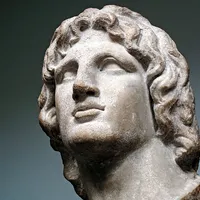
Nero (Ancient Rome – 1st Century AD)
Nero was the 5th and final Roman emperor of the Julio-Claudian dynasty who ruled from 54 AD until his suicide in 68AD. His historical legacy is defined by his tyrannical rule, state sponsored executions, and near-collapse of the Roman treasury.
In 59 AD, Nero orchestrated the assassination of his own mother, Agrippina the Younger after growing weary of her political interference. After a bizarre, failed attempt to drown her in a booby-trapped, self-sinking boat, he dispatched a palace hit squad to stab her to death.
In 62 AD, Nero divorced his first wife, Claudia Octavia, falsely accused her of adultery, banished her, and ordered her suffocated in a steam bath. Later, in 65 AD, he allegedly killed his second, pregnant wife, Poppaea Sabina, by kicking her violently in the stomach during a fit of rage.
In a bizarre and deeply abusive manifestation of grief and guilt following Poppaea’s death, Nero took a young freedman named Sporus who resembled his late wife, ordered him castrated, and forced him to dress in imperial regalia to undergo a formal public marriage ceremony.
Nero used the services of the state poisoner Locusta to eliminate his 13-year-old stepbrother and potential rival, Britannicus to solidify his claim to the throne. The boy was poisoned via a chilled goblet of water at a royal dinner party.
About two-thirds of Rome was destroyed by the Great Fire of Rome in 64 AD, which burnt nonstop for more than a week. It was claimed that Nero intentionally intensified the fire in order to make way for his lavish 100 acre mansion, the Domus Aurea or Golden House. Neri launched first state-sponsored persecution of Christian community by blaming them for the fire so that he can divert ire away from the public. Hundreds were burnt as human lights for Nero’s personal night gardens or torn to pieces by ferocious animals in arenas.
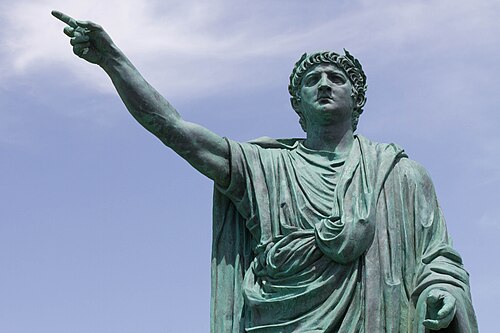
Gan Ning (Ancient China – 2nd Century AD)
Gan Ning was a prominent and fiercely courageous military general who served the warlord Sun Quan during the late Eastern Han dynasty and Three Kingdoms period of China. Before achieving imperial glory as a decorated naval commander, he spent his youth as an infamous, flamboyantly cruel outlaw and pirate chief across the Yangtze River region.
Throughout his late teens and twenties, Gan Ning led a heavily armed gang of wayward youths to pillage and terrorise the Ba Commandery. He and his fleet robbed merchants by targeting civilian trade vessels and killed those who resisted.
He forced his men to wear distinct bronze bells. The ringing of these bells served as a deliberate psychological tool, alerting communities living by riverside of impending plunder which resulted in immediate submission.
If local or government officials did not immediately indulge his gang with lavish gifts, banquets, and praise, Gan Ning unleashed his followers to systematically strip them of all wealth and property, frequently murdering them in the process.
In a famous display of his volatile temper, Gan Ning hunted down a young kitchen boy who had committed a minor offence. Even after promising general Lü Meng that he would spare the child, Gan Ning broke his word, tied the boy to a tree, and personally shot him to death with arrows before casually taking a nap.
During the Battle of Jiangxia, while serving under Huang Zu, Gan Ning shot and killed the Wu general Ling Cao. Even after Gan Ning defected to Wu and was ordered by Sun Quan to maintain peace, his volatile nature kept a bloody feud alive with Ling Cao’s son, Ling Tong, nearly causing internal military mutiny.
Now, that you have read about 9 most heinous criminals in ancient history, you might want to explore other blogs on the website.
You may like these:
US and Iran relations: How Iran Went from Friend to Foe of the USA?